Sunshine Mine
History of Sunshine Mine
From the 19th Century to the 21st Century
1884 – 2002 Rise and Fall of Sunshine Mining Company
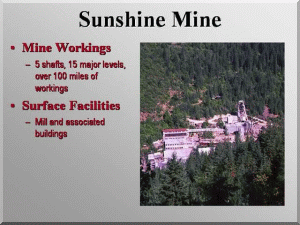
The Sunshine Mine property had its beginning in 1884 when the Blake brothers staked the Yankee Lode mining claim. Various contiguous holdings were consolidated to become the Sunshine Mining Company in 1920. The mine was then an economically marginal property consisting of 15 patented claims and one un-patented claim shipping hand-sorted ore with a silver price of $1.00/oz.
In 1921 a 25 tons per day mill was constructed. From this modest beginning, the mill was expanded piecemeal and eventually reached a daily capacity of 500 tons. Soon after the concentrator was commissioned, the Sunshine tunnel was driven from the surface in an exploration effort which discovered higher quality ore historically identified as “Chinatown” In 1926, encouraged by the production successes in the Chinatown area, (upper Sunshine Vein), the Incline shaft was sunk from the Sunshine tunnel elevation to well below the bottom of the Chinatown working areas, eventually reaching 1900 level in1934. Soon after, drift crews discovered a bonanza vein of the first order. The No. 3 shaft was then started eventually to reach the 3100 level in 1938.
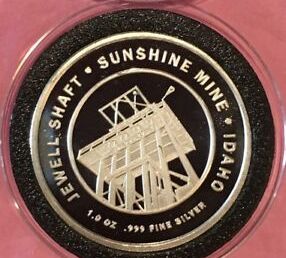
In 1935 the concentrator was upgraded with new ball mills grinding units and flotation cells increasing the capacity to 1000 tons per day while attaining a recovery of 98%. The sinking of the new four-compartment vertical Jewell shaft was started reaching the 2300 level in 1936.
In 1943 a drift crew, drifting east on 2700 level following the Silver Syndicate fault, direction discovered the famous Chester vein.
It was primarily the exploitation of the Sunshine vein followed by the Chester vein that determined the present configuration of the underground workings. With the discovery of the Chester on 2700 level and the ore body’s distance from the Jewell of approximately 4000 feet east – southeast, other internal shafts the No. 4, No. 5 and No. 10 shaft (more properly defined as winzes) were sunk or raised to more efficiently service the operations. The other principal internal shaft is the No. 12 shaft, servicing the Copper vein and the West Syndicate vein in the western end of the mine.
In 1960, sand-filling operations were introduced underground. The mill tailings were classified so that the coarser material, approximately 45% of the total mill feed, being used for stope backfill.
By the end of 1988, the mine was at full production. Ore production was primarily from mining the Chester vein systems serviced by the No. 10 shaft and the remnants of the Sunshine and Rambo vein stopes referred to as the Footwall area on 3700 and 3400 levels. The 4000 and 4200 level Copper vein was under development from the No. 12 shaft.
In 1989, the mine produced 4.8 million ounces of silver. The production from the high grade Copper vein stopes began to impact the silver production volumes. During 1990, the mine produced 5.4 million ounces of silver, the highest since 1971. By now the high grade Copper vein stopes on 4200 level were becoming substantial producers, while production from the 10 shaft stopes was dropping off.
In 1991 the silver price fell to $3.90 per ounce and the operation was losing money. A mining plan was put together to reduce losses substantially while waiting for prices to improve. This plan was referred to as the “small mine plan” and was implemented in June 1991. The operation headings underground were centralized by shutting down the outlying, more costly production and development headings, and limiting operation to day shift only. The mining operations were consolidated in the area of the Copper vein and the most productive headings in the “Footwall Area”. The mine below 5000 level was salvaged and allowed to fill with water. Production was cut in half, while the work force was reduced by 65%.
In 1992, the West Chance vein was discovered. By late 1996 it was clear the ore body was of sufficient size and value to support the mine’s return to full production. The reserves were then developed by trackless ramp and lateral development methods using LHD (Load-Haul-Dump) equipment. The working areas outside the West Chance were shut down and salvaged in an orderly fashion and all resources were directed toward the West Chance. By July 1997, the mine workings below the 4000 level were salvaged of all usable equipment and materials and allowed to begin filling with water.
In 1995, Sunshine acquired the neighboring Consolidated Silver (ConSil) property generally consisting of the surface facilities and the underground workings of the commonly known Silver Summit Mine. This mine has served as the Sunshine Mine’s second access for years. The ConSil underground mine workings are primarily accessed by an adit from the surface located about two miles east of the Jewell shaft to an internal shaft, which extends vertically 5600 feet.
The mine ceased production in the first quarter of 2001 as a result of several factors, including the low price of silver and the lack of regular and consistent exploration and development activities due to prior management shifting cash flow from the mine to sustain corporate expenses, debt and other projects.
At closure the mine reserves were 1.13 million tons containing 26.75 million ounces of silver at 23.6 ozs Ag/ton. Upon closing of the mine these ‘Historic’ or ‘Legacy reserves’ were reclassified to ‘mineralized material’ as required by the United States Securities and Exchange Commission (SEC) regulations. These “Legacy Resources” are now classified as being Mineral Resources under the CIM Definition Standards.
From historical records beginning in 1904 the Sunshine Mine has produced 364,893,421 ounces of silver from 12,953,045 tons of ore through 2001 when the mine was closed. From January 1, 1998 to January 1, 2001 the average reserves carried by the mine were 1.38 million tons containing 32.20 million ounces of silver at 23.3 ozs Ag/ton.
Sunshine Mine, the country’s largest silver mine, closes – Deseret News
2003 – 2009 : Sterling Mining Era
Sterling Mining Company acquired control of the property. The company developed a new mine plan, rehabilitate the mine for a return to producton. Production began at the end of 2007. The feasibility plan projected within five years production. to reach 5 million ounces per year after the start of production, Sterling Mining Company expanded the land package by three times to over fifteen thousand acres of mining claims .
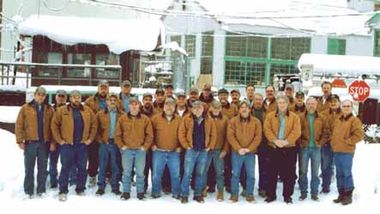
Former Sunshine Mine manager Micheal Mclean was hired, and Sterling Mining established a priority of hiring former Sunshine Mine personnel wherever possible to gain the expertise and experience of those who had run the mine before.
Raymond De Mote and Michael Mclean developed a three Phase Plan to rehabilitate and prepare Sunshine Mine facilities for a return to production at the start of 2008, and a three-phase conceptual mine plan to guide operations and prepare for an independent NI43-101 report to support financing and listing on a major stock exchange.
After taking over the property, Sterling personnel began inspecting and prioritizing work to be done to minimize deterioration of facilities that had not been maintained and return them to safe, fully operational status. Being one of the pillars of the operation, work was started on the Jewell Shaft hoists to ensure the soundness of both the double-drum production hoist and the single-drum “chippy” hoist used for moving personnel and supplies.
In April 2004, Phase I of a comprehensive Conceptual Mine Plan was completed which broadly defined the parameters, operating criteria and costs that would be involved to return the Sunshine Mine to production.
By the end of April 2004, both hoists were re-conditioned and operational. An experienced crew re-established shaft signals and communications to allow inspection of the Jewell Shaft to the 3100 level (-427 ft, sea level). After determining the fitness of the shaft, key personnel were able to be lowered to inspect underground.
In 2005 Phase Il of the Conceptual Mine Plan was completed in late March and subjected to a final internal review in April. The Phase Il study was meant to both verify projections and outline a schedule of activities and costs during Phase Ill to prepare for production and necessary financing.
Phase Ill, commenced, focusing on “fine tuning” the mine plan and providing more detailed engineering for evaluating water treatment and tailings management options. In addition, inventories of mine-wide mineralization are being categorized along with an in-depth analysis and prioritization of several significant underground exploration opportunities. Critical path elements and work were constantly being reviewed and progress tracked.
In December 2005, Behre Dolbear & Company, an internationally recognized engineering firm was retained to review work by the Sterling staff and facilitate moving the Conceptual Mine Plan forward.
In 2006 Sterling’s three phase internal conceptual mine plan complete and the prestigious mineral consulting firm Behre Dolbear began work to prepare an independent technical report. During 2006 additional operating personnel hired, ordering underground diesel equipment, and preparation activities at the 2700 and 3100 level for a return to production. Behre Dolbear NI43-101 Technical Report for the Sunshine Mine was completed in April 2007. The Company secured additional financing, and ramped up hiring, equipment purchases, and activities for a return to production with the first shipment of silver concentrate shipped in December 2008.
.However in May 2008 a boardroom coup led to a change in management, and production ceased in September 2008, and in 2009 the company declared bankruptcy.
2010 – A New Era : Sunshine Silver Mining and Refining
Silver Opportunity Partners acquired the assets of Sterling Mining Company. operating as Sunshine Silver Mining and Refining , the company reports over $100 million has been spent on developments and exploration- with forecast of a return to production prior to 2030 and forecast production of 7 million ounces per year.
Sunshine Mine Today :
Virtual Site Tour – Sunshine Silver Mining
Sunshine Mine in the News :
Sunshine Silver has expanded the 20,000 acres of mining prospects acquired from Sterling Mining to now over 38,000 acres !
Sunshine Silver Mining & Refining Expands Silver Valley Land Position by 60% to Approximately 38,000 Acres andInitiates Multi-Year, 45,000-Meter District-Scale Exploration Program
Sunshine Silver Mining raises $270 million in US IPO
Sunshine Silver Mining and Refining Files Registration Statement to go Public
Catching up with Silver Valley’s Sunshine Mine | Spokane Journal of Business‘
Sunshine Mine kicks off drilling exploration program | Shoshone News-Press
Gallery
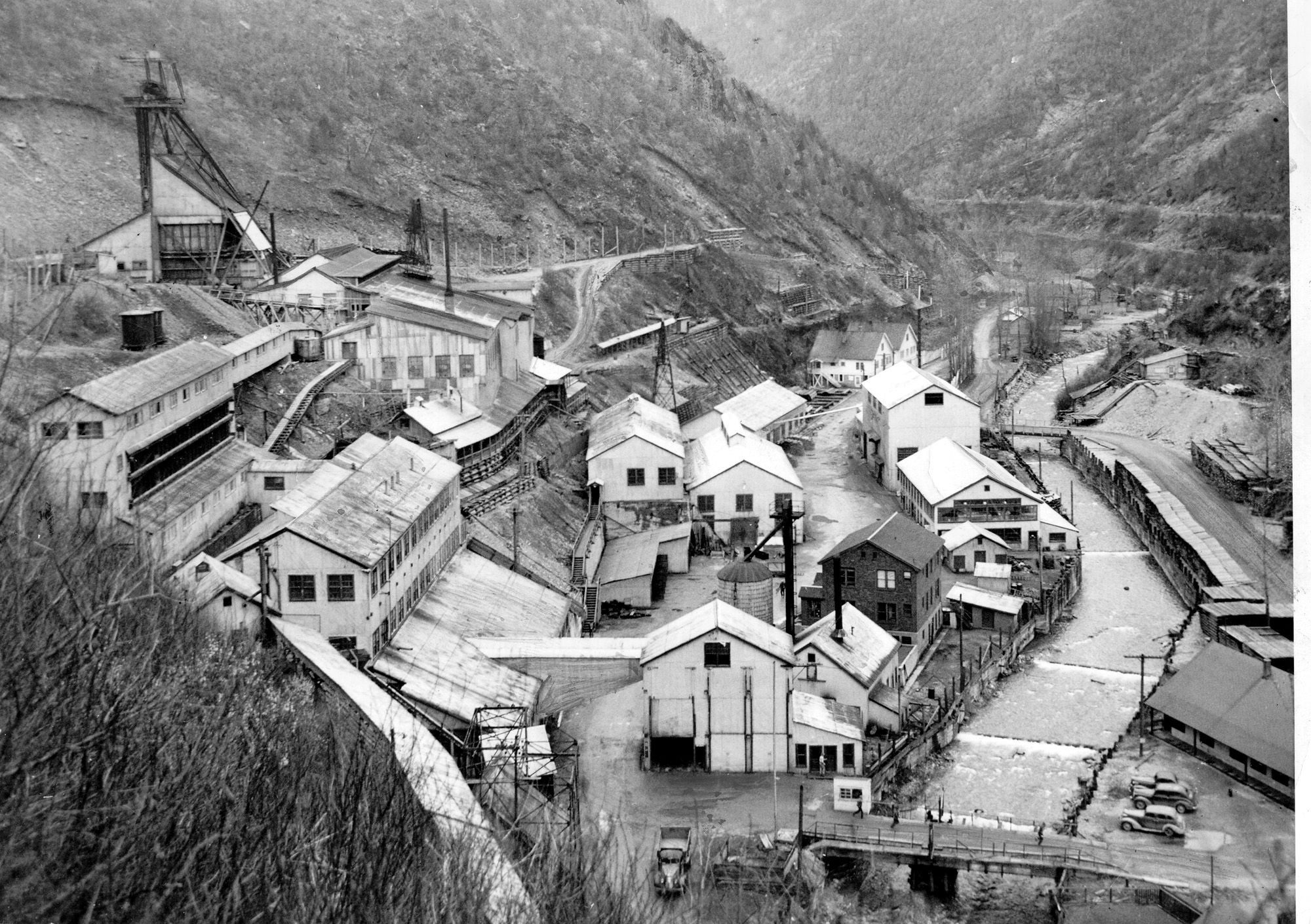
The legendary Sunshine Mine of North Idaho
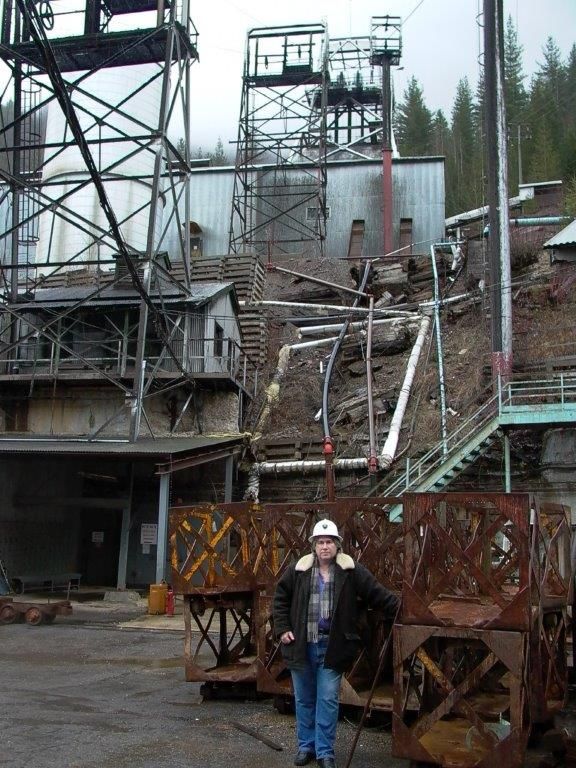
The Legendary Sunshine Mine