History of Sterling Mining Company
Founded in 1903 in Wallace, Idaho, Sterling Mining Company has played a role in the Coeur d’Alene Mining District for more than a century. From early exploration tunnels to the acquisition of the legendary Sunshine Mine, the company’s story reflects the evolution, challenges, and resilience of the American silver mining industry.
Early Years (1903–1998)
Sterling Mining was founded by John Presley, who initially staked the East‑West Link claims. Early exploration included driving six tunnels into the property, laying the groundwork for future development.
“In the first 30 years, early exploration included the driving of six tunnels onto the property.”
From the 1950s onward, Day Mines and related entities leased the Sterling property for exploration. Like many mining companies of the era, Sterling financed operations by assessing shareholders, with unpaid shares forfeited and auctioned.
Sterling stock traded on the Spokane Stock Exchange until its closure in 1991, after which shares moved to the OTC market. In 1996, Coeur d’Alene Mines leased the original East‑West Link claims.
A major turning point came when John Swallow, then President, negotiated a merger agreement with Ashington Mining Corporation, led by Raymond De Motte.
Expansion and the Ashington Merger (1998–2003)
In 1998, Sterling Mining acquired Ashington Mining through a share exchange. At the time, Sterling’s stock traded at $0.25 per share.
“Sterling Mining Company through a share exchange acquired the Ashington Mining Corporation… The President of Ashington… Raymond De Motte became President of Sterling Mining Company.”
Under De Motte’s leadership, the company aggressively expanded its land position in Idaho and Montana.
The Sunshine Mine Era (2003–2008)
Acquisition and Revival of the Sunshine Mine (2003)
In 2003, Sterling acquired a lease with option to buy the historic Sunshine Mine. Former President John Swallow played a key role in securing the deal. that Raymond De Motte negotiated Sterling’s stock surged dramatically, becoming the best‑performing silver mining stock of 2003.
The company hired former Sunshine Mine manager Michael McLean and prioritized bringing back experienced Sunshine personnel.
De Motte and McLean developed a three‑phase plan to rehabilitate the mine, restore infrastructure, and prepare for an NI 43‑101 technical report.
Operational Progress (2004–2007)
International Expansion: Mexico Operations (2004–2007)
Between 2004 and 2007, Sterling:
- Completed Phase I,II and III of the Sunshine Mine Conceptual Plan , Mining Plan and Economic Assessment
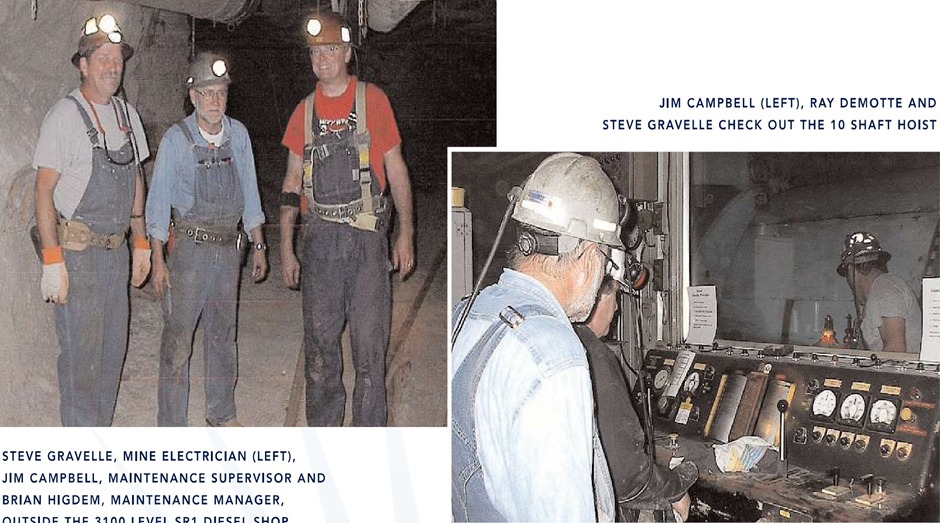
- Reconditioned the Jewell Shaft hoists and restored underground access
- Conducted extensive engineering, water treatment, and tailings studies
- Retained Behre Dolbear, a respected engineering firm, to review and advance the mine plan
- Completed the NI 43‑101 Technical Report in April 2007
- Secured a listing on the Toronto Stock Exchange
- Began shipping silver concentrate in December 2007, meeting the original restart timeline
- Sterling Mining expanded into Mexico with the Baroness Silver Project, the first environmentally safe thiosulfate project in Zacatecas, with profitable production from the project.
“Sterling began operating in Mexico, with the acquisition of Baroness Silver Project in 2004… Sterling Mining de Mexico was formed.”
- The company later acquired additional prospects, including a lease‑option on the San Acacio Mine, and increased its land position in the Zacatecas Silver District.
Corporate Conflict and Decline (2008–2010)
Leadership Change and Internal Disputes
In May 2008, Ken Bercht became President. Relations between management, directors, and partners deteriorated rapidly.
“New management and the directors became embroiled in poor relations and disputes… The prior cordial relations disappeared.”
- The company incurred EPA fines and failed to pay required royalties to the Coeur d’Alene Tribe.
- Sterling Mining de Mexico employees revolted against the new management
Failed Merger Attempts
- Minco Silver offered a merger valuing Sterling at $62.3 million, including a $15 million credit line. After contentious negotiations, Minco withdrew its offer in September 2008.
- By late 2008, operations at the Sunshine Mine were shut down.
Bankruptcy and Asset Sale
Internal disputes continued through 2009, with multiple leadership changes and failed acquisition attempts.
“Voorhees… proceeded to have Sterling Mining Company file bankruptcy.”
On April 22, 2010, Silver Opportunity Partners acquired Sterling’s assets for $24 million, paying $0.06 per share to shareholders.
Silver Opportunity Partners—now operating as Sunshine Silver Mining & Refining—has invested heavily in the Sunshine Mine.
“Silver Opportunity Partners reported in 2026 over 100 million dollars have spent on further exploration and development…”
The land package assembled under Raymond De Motte has largely been preserved. The company is now well‑financed, professionally managed, and focused on returning the Sunshine Mine to production.
In Mexico, many former Sterling Mining projects have been optioned or leased to junior mining companies.
Jewell Shaft Rehabilitation Starts at Sunshine Mine